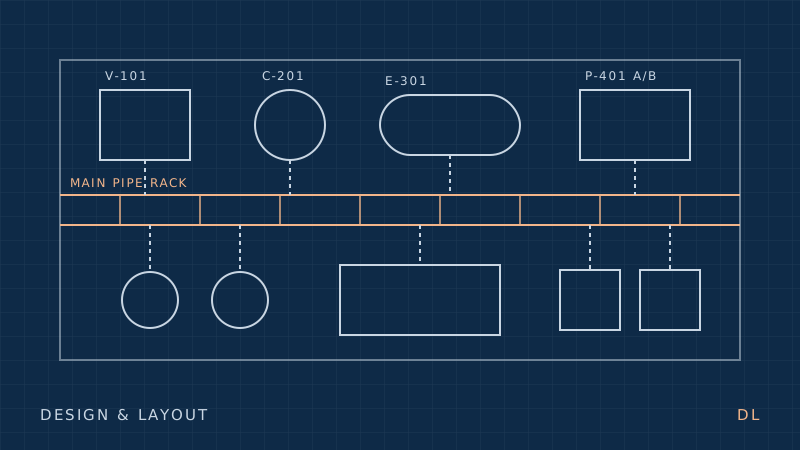
Pipe Rack vs Topside Module: Laying Out Piping Where Space Costs Money
Onshore you trade space for access. Offshore every square metre and every tonne is paid for. Here is how that one difference reshapes routing, supports and maintenance access.
Environment
Onshore you trade space for access. Offshore every square metre and every tonne is paid for. Here is how that one difference reshapes routing, supports and maintenance access.
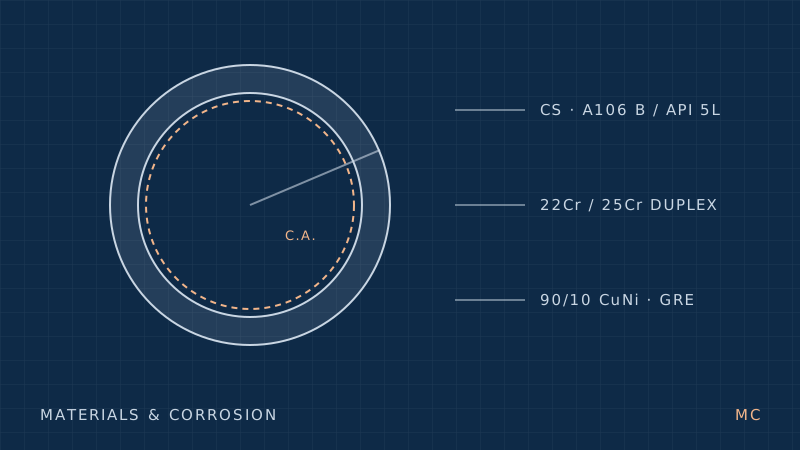
When hydrogen sulfide is present, ordinary steel can crack without warning. Here is when a line becomes "sour" and what that changes in materials, hardness and welding.
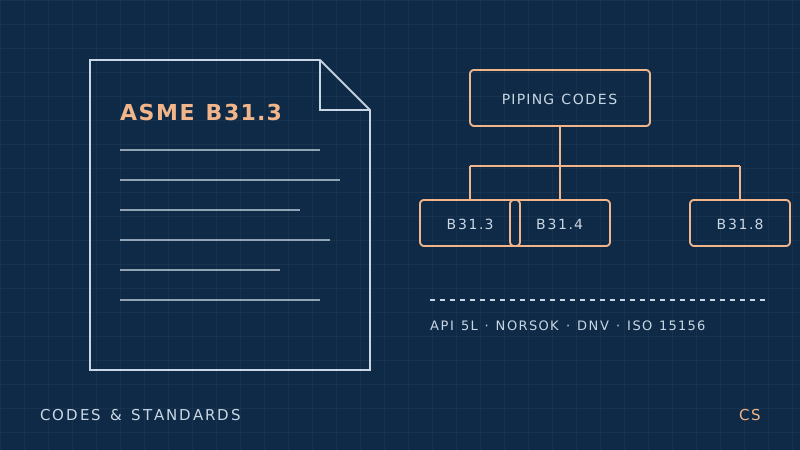
The fluid service category decides how much examination and testing a line gets. Picking the wrong one either wastes money or leaves a real hazard under-inspected.
Seawater systems are among the most corrosion-prone on any facility. Three materials dominate the choice, each with its own limits on velocity, temperature and fire.
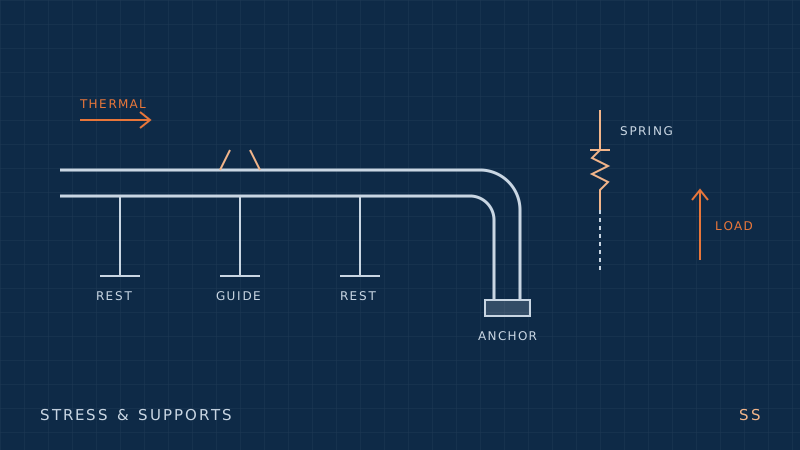
You can't run a computer model of every line. A critical line list sorts the system so the stress team spends its time where failures actually happen.
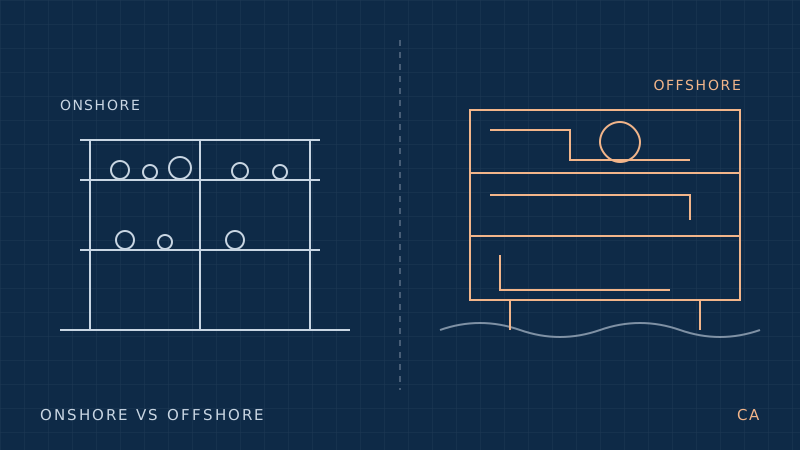
The same process duty, a pump drawing from a separator, is laid out very differently on a refinery plot and on an FPSO deck. Here is how and why.
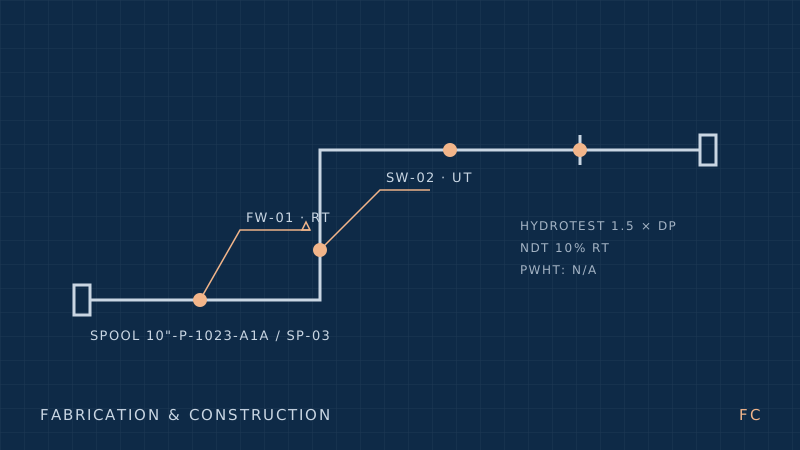
Three documents stand behind every weld: the procedure, the proof that it works, and the proof that the welder can do it. Here is how they fit together.
Firewater systems sit idle for years and then must work perfectly. Onshore and offshore designs share that goal but solve it with different materials and layouts.
API 5L pipe comes in two product specification levels. PSL2 adds toughness testing, tighter chemistry and more control, and many projects require it by default.
Most pump problems that look mechanical start in the piping. A short, smooth suction and a well-supported discharge make the pump's life much easier.