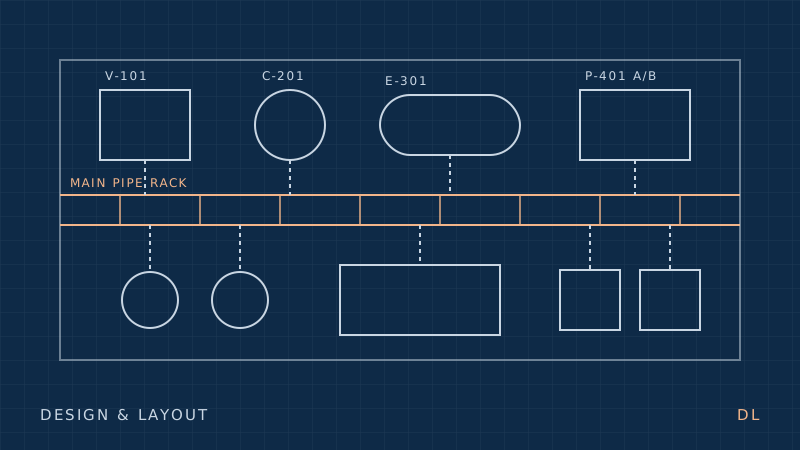
Pipe Rack vs Topside Module: Laying Out Piping Where Space Costs Money
Onshore you trade space for access. Offshore every square metre and every tonne is paid for. Here is how that one difference reshapes routing, supports and maintenance access.
Environment
Onshore you trade space for access. Offshore every square metre and every tonne is paid for. Here is how that one difference reshapes routing, supports and maintenance access.
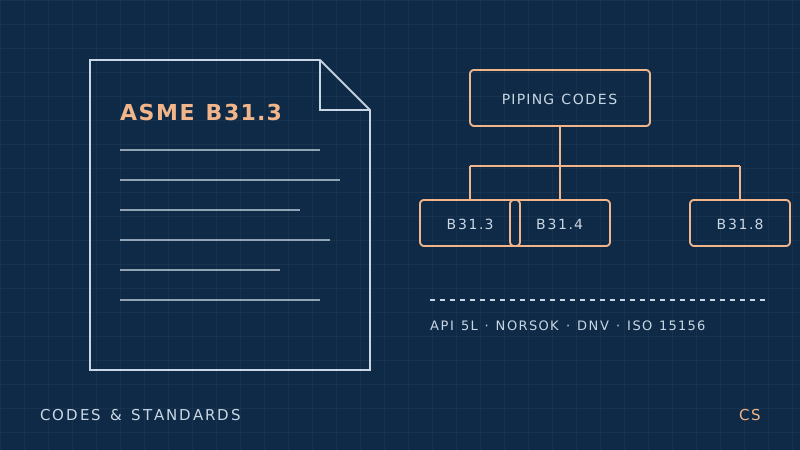
Plant piping, liquid pipelines and gas pipelines each have their own ASME code. Here is where one ends and the next begins, and why the boundary matters.
Every flange, valve stem and drain point is a potential source of release. Zoning tells you where flammable gas may be present, and good layout keeps those zones small.
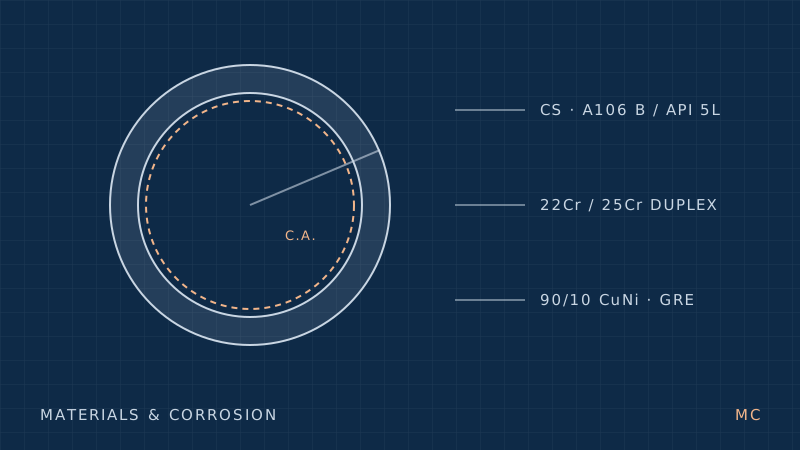
When hydrogen sulfide is present, ordinary steel can crack without warning. Here is when a line becomes "sour" and what that changes in materials, hardness and welding.
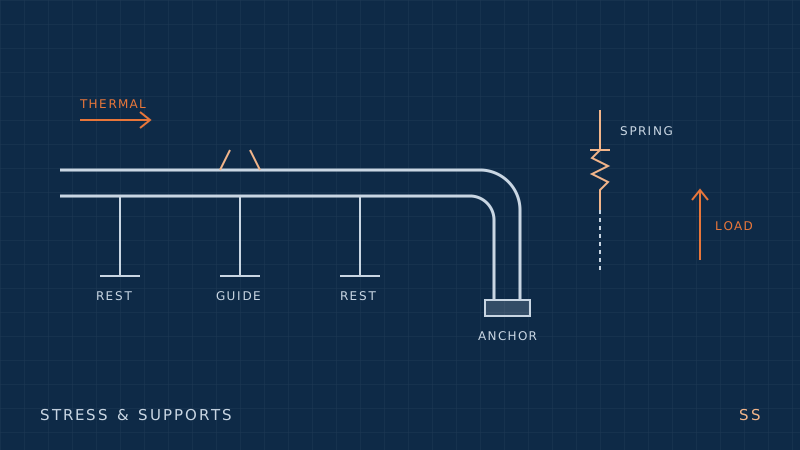
On a floating unit the deck itself moves. Hull bending and wave-induced motion become load cases in the stress model, and they shape how topside piping is routed and supported.
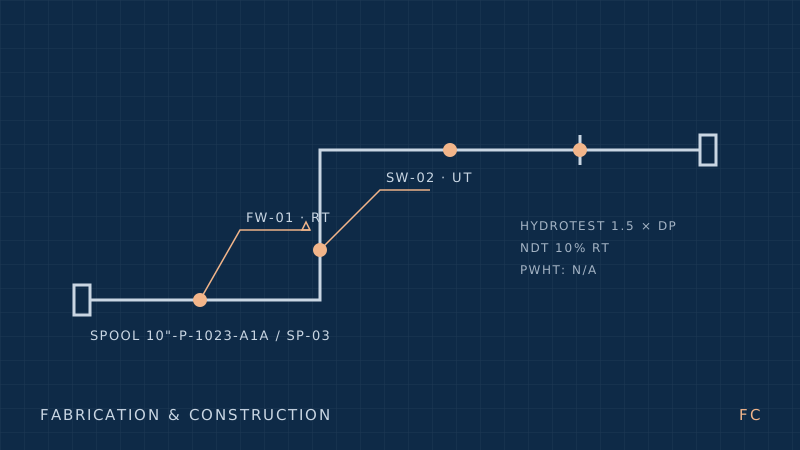
Every new piping system is pressure tested before it goes into service. Water is the default because it stores little energy; gas testing is allowed only when water is impractical, and with extra precautions.
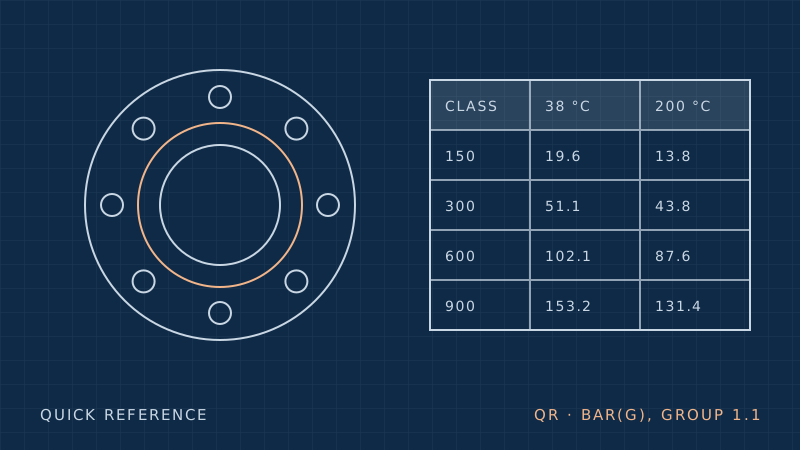
Pipe size names are a legacy of the 1920s, and they still confuse new engineers. Here is how NPS, outside diameter and schedules fit together.
The fluid service category decides how much examination and testing a line gets. Picking the wrong one either wastes money or leaves a real hazard under-inspected.
The P&ID is the contract between process and piping. Learn the handful of details that matter most when you turn it into a 3D model and isometrics.
Seawater systems are among the most corrosion-prone on any facility. Three materials dominate the choice, each with its own limits on velocity, temperature and fire.