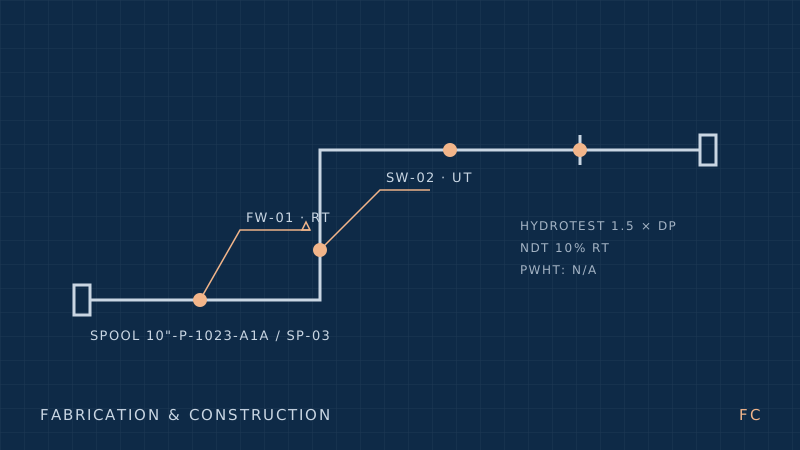
Spool Fabrication: From Isometric to Shipped Spool
Most piping is built in a shop as spools and welded together on site. Here is the journey of a spool, and where things usually go wrong.
Environment
Most piping is built in a shop as spools and welded together on site. Here is the journey of a spool, and where things usually go wrong.
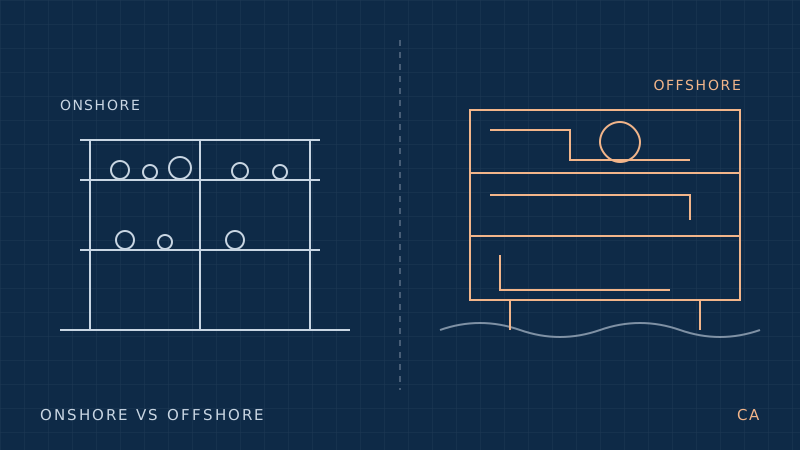
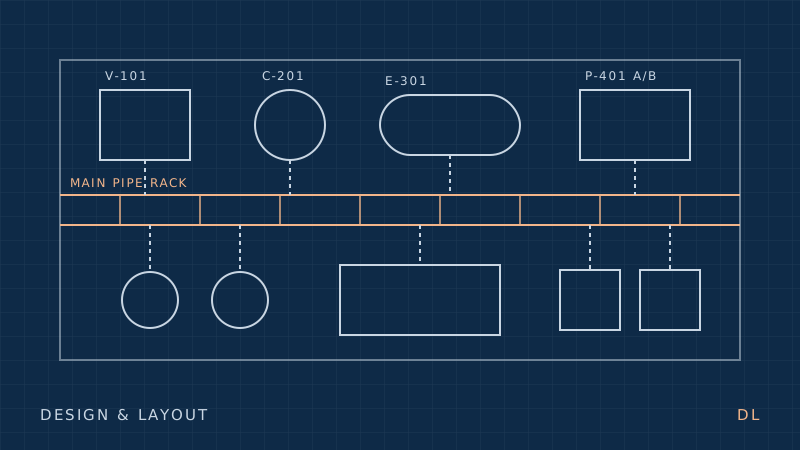
The same process duty, a pump drawing from a separator, is laid out very differently on a refinery plot and on an FPSO deck. Here is how and why.
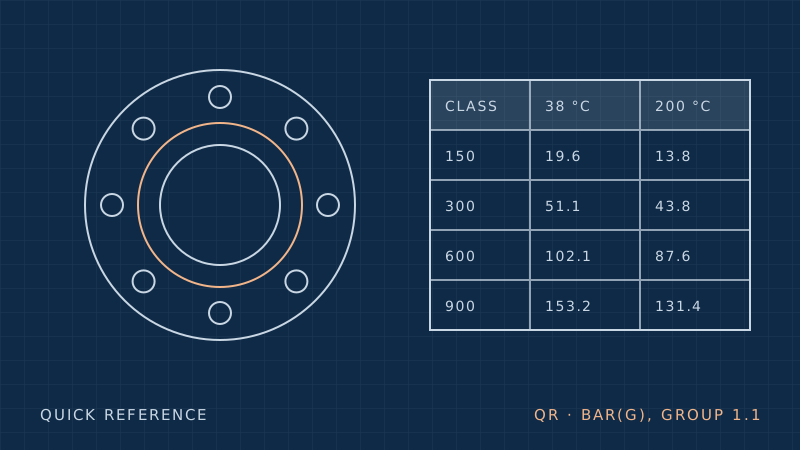
A Class 150 flange is not rated for 150 bar or even 150 psi at every temperature. Here is how pressure classes, material groups and temperature combine.
Every line on a P&ID points to a piping class. Here is what sits inside that class and how to read one without getting lost.
An isometric is the drawing a fabricator builds from and an inspector signs off. Here is how to read one: coordinates, welds, spools, supports and the material list.
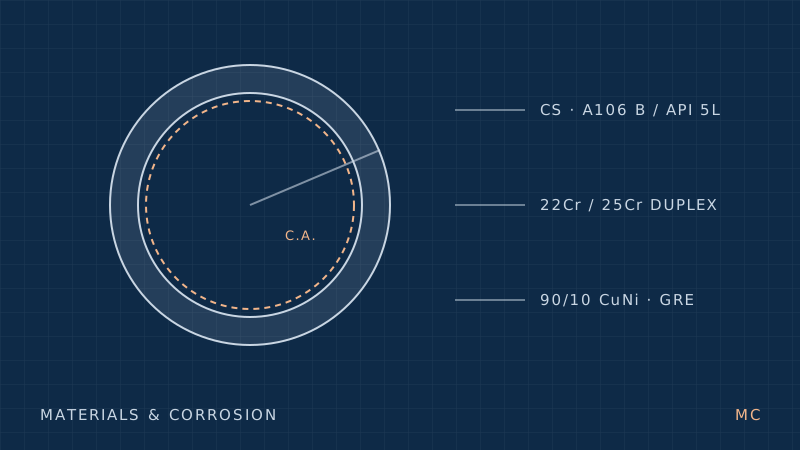
Most process piping is carbon steel, but not all carbon steel pipe is the same. Here is how the common grades differ and how to match pipe, fittings and flanges.
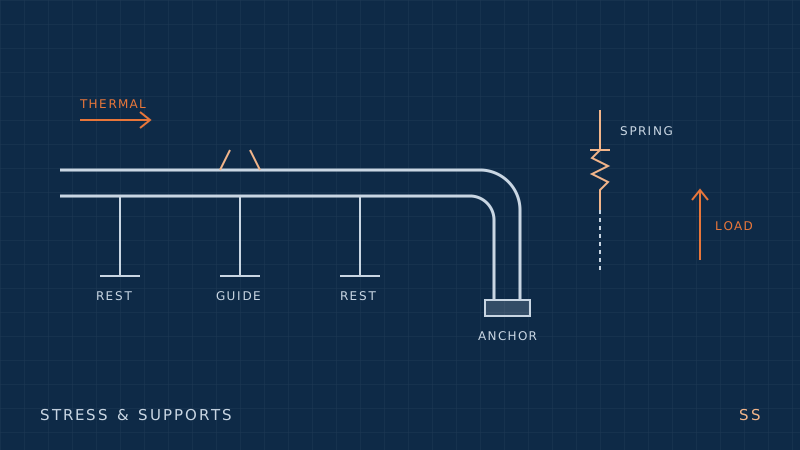
Supports do more than carry weight. Each type allows some movements and stops others, and choosing the right one is half of stress analysis.
Three documents stand behind every weld: the procedure, the proof that it works, and the proof that the welder can do it. Here is how they fit together.
Firewater systems sit idle for years and then must work perfectly. Onshore and offshore designs share that goal but solve it with different materials and layouts.
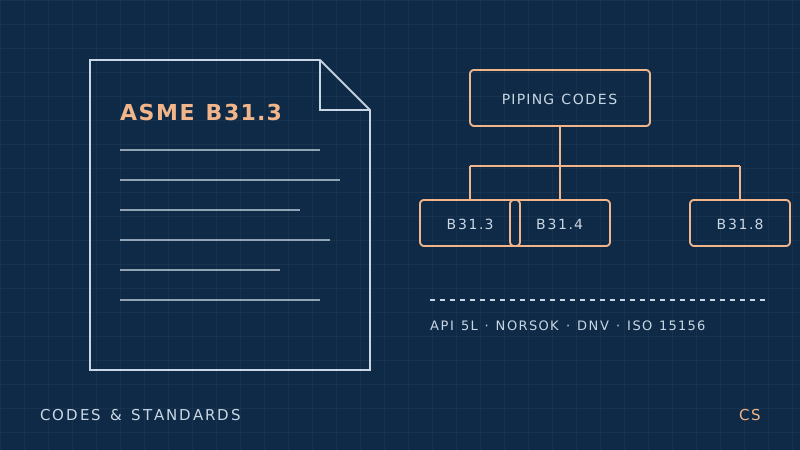
Piping documents are full of three-letter abbreviations. Here are the ones you'll meet in your first month on a project, grouped by where you'll see them.